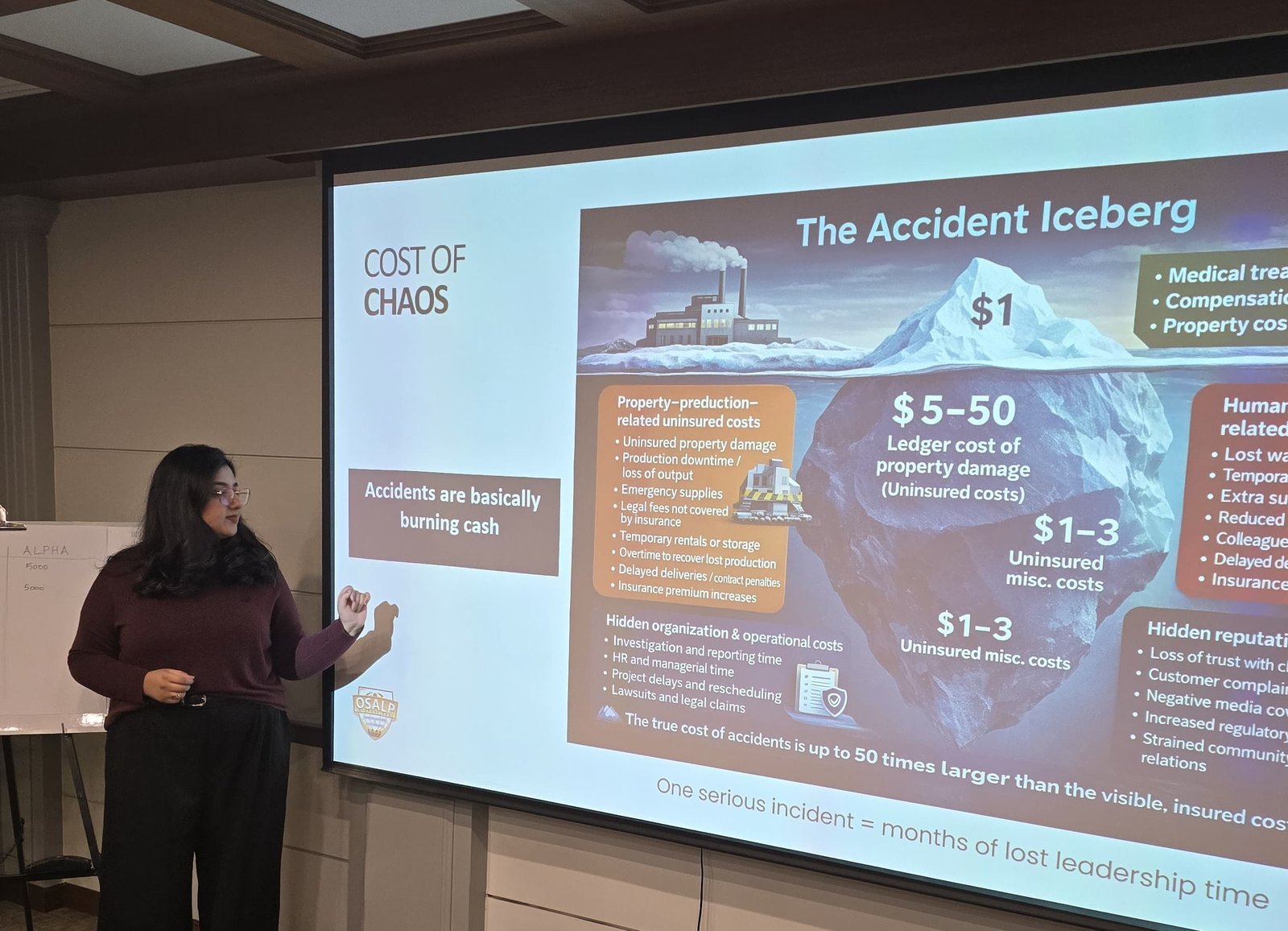
A major energy operator invited OPDEV to work with senior and non-HSE managers on one core question. How do we move safety leadership from formal procedures into everyday behaviour, especially in high pressure operations.
The result was a full day Safety Leadership Workshop that combined initial assessment, interactive learning, and applied insight. The focus stayed on what leaders actually do, how they influence others, and how culture shapes safety outcomes.
Starting with a clear picture
Before any content, leaders shared their expectations and current concerns. Themes included:
-
Reducing accidents and associated costs
-
Training and influencing others safely
-
Improving individual and team performance in real conditions
This short assessment gave us a behavioural map. We could see where leaders felt confident, where safety felt distant from their role, and where the Hidden Operating System pulled people towards “getting things done quickly” instead of pausing to assess risk.
A leadership lens on safety
Throughout the workshop, we returned to one principle. Leadership behaviour shapes safety, well beyond formal HSE roles.
Through interactive scenarios and guided reflection, participants:
-
Saw how quickly they moved to task completion when time felt tight
-
Noticed how their verbal and non-verbal signals affected how teams interpreted risk
-
Connected safety decisions with operational, financial, and human consequences
Short theory inputs linked these experiences to research on psychological safety, motivation, and safety culture. Leaders explored how trust, communication, and influence routes affect whether people raise concerns early or stay silent.
From “HSE department” to shared responsibility
By the end of the day, participants had moved from seeing HSE as a specialist function towards viewing it as a leadership responsibility that lives in daily routines. They:
-
Developed a clearer understanding of why safety matters financially, socially, and operationally
-
Recognised how their decisions and style influence safety behaviour
-
Practised language that invites safer behaviour without creating conflict
-
Aligned on the importance of intentional culture development and reinforcement over time
The workshop emphasised that safety culture is built through repeated signals, not through a single campaign.
Recommendations that emerged
Working with the client, OPDEV highlighted several priorities:
-
Embed leadership in everyday safety behaviour. Make safety-supporting behaviours, such as visible presence and calm, clear decision making, part of standard leadership practice.
-
Develop psychological safety for open reporting. Encourage people to raise hazards and near misses without fear, and respond constructively when they do.
-
Grow behavioural skills alongside technical knowledge. Equip leaders to coach, prompt, and influence safe behaviour, rather than relying only on rules.
-
Measure and reinforce behaviour. Include proactive safety behaviours and leader visibility in performance conversations and team routines.
These directions now inform wider work on safety culture with the organisation.
How OPDEV supports safety leadership
This workshop sits within OPDEV’s Safety Leadership and HSE capability pathway for organisations in Pakistan, the Middle East, the United Kingdom, and South Asia.
Programmes typically include:
-
An initial behavioural assessment of safety leadership
-
Interactive workshops for senior and non-HSE leaders
-
Follow up sessions on psychological safety, coaching skills, and structured observation
The aim is steady. Safety becomes part of how leaders think, decide, and speak every day, rather than a separate checklist.